
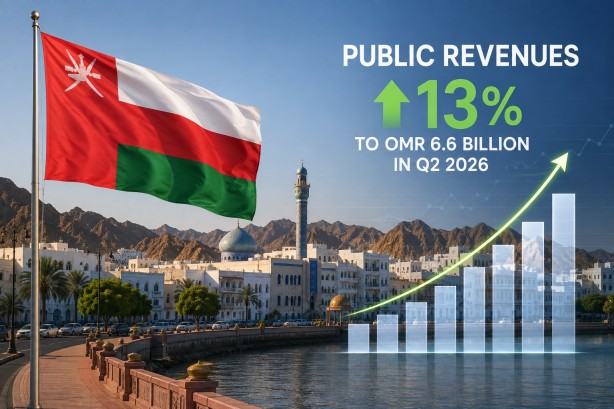
By the end of the second quarter of 2026, Oman experienced a notable increase in public revenues, which climbed by 13% year-on-year to reach around OMR 6.602 billion. This growth was largely fueled by a rise in oil and gas revenues. Compared to the same time frame in 2025, when public revenues stood at OMR 5.839 billion, the current figures mark a significant uplift. Specifically, net oil revenues saw a 10% increase, amounting to OMR 3.332 billion, while net gas revenues surged by 32% to OMR 1.164 billion.
In terms of oil production, Oman achieved an average realized oil price of $74 per barrel, with an average daily output of approximately 1.074 million barrels. This uptick in energy revenue was a key contributor to the overall boost in public finances. However, alongside the rise in revenues, public expenditure also saw an increase, climbing to OMR 6.619 billion, which is a 9% rise from OMR 6.098 billion the previous year. The breakdown of spending shows that current expenditure reached OMR 4.369 billion, while development spending by ministries and civil units hit OMR 798 million.
Despite the elevated spending levels, Oman maintained a relatively stable public debt, which stood at OMR 14.16 billion, only slightly higher than the OMR 14.12 billion recorded in the same period the previous year. This stability in public debt, even amidst increased expenditure, highlights the effectiveness of Oman’s fiscal management strategies in leveraging enhanced energy revenues.
The data underscores a continued positive trajectory for Oman’s public finances in the first half of 2026, with stronger energy revenues underpinning this growth. The government’s ability to balance increased revenues with rising expenditures without significantly impacting public debt is indicative of a well-managed fiscal policy environment in the country.