
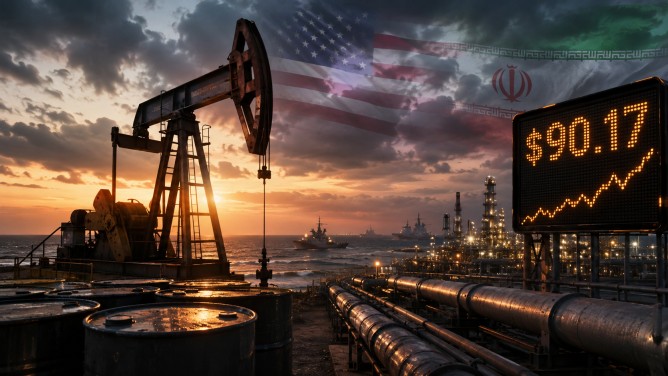
Oil prices saw a significant rise as the deadline for peace talks between the United States and Iran lapsed without reaching an agreement, sparking concerns that the conflict could persist and further impact global energy supplies. Brent crude surpassed $90 per barrel, climbing to approximately $91.63, marking its peak since July 30. This uptick followed U.S. President Donald Trump’s insistence on Iran’s surrender and his warnings of potential escalation should diplomatic efforts falter.
The situation has cast a spotlight on the Strait of Hormuz, a vital corridor for global oil shipments. A noticeable decrease in the number of commercial vessels navigating this route has amplified fears of continued disruptions in oil supply chains. This strategic waterway is crucial for the transportation of a significant portion of the world’s oil, and any hindrance here could have widespread repercussions.
Amid the tense atmosphere, Iran has hinted at possibly adopting a more assertive military stance if discussions remain unsuccessful. Reports of an attack on a cargo vessel traveling through the Strait of Hormuz have further intensified worries regarding maritime safety in the area. Such incidents contribute to the growing apprehension among stakeholders about the security of shipping lanes.
These developments have led investors to brace for potentially prolonged disruptions in oil supplies. Analysts are warning that an extended closure or reduced activity in the Strait of Hormuz could exert additional upward pressure on crude oil prices, affecting markets worldwide. The confluence of ongoing tensions in the Middle East and the war in Ukraine suggests that the global energy market could experience further volatility, leading to a rise in oil and gas prices.