
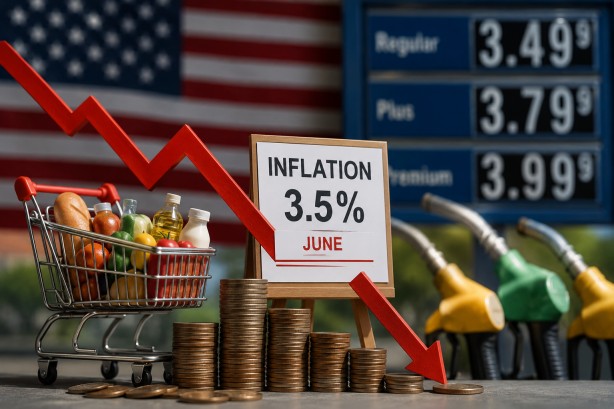
The pace of annual inflation in the United States eased to 3.5% in June, aided by a temporary drop in energy prices which helped lower overall consumer expenses. The latest data from the Consumer Price Index (CPI) shows a significant decrease in inflation, which had been climbing in previous months. Prices fell by 0.8% compared to May, primarily due to a reduction in gasoline and fuel costs. This decline helped counterbalance rising prices in areas such as food, housing, and utilities.
Despite the current relief, core inflation—which excludes the more unpredictable categories of food and energy—also showed a slight reduction, standing at 2.6% annually. This measure is closely watched by the Federal Reserve as it plays a crucial role in monetary policy decisions. However, the respite in inflation figures might be brief, as renewed geopolitical tensions in the Middle East have already driven up global oil prices, which, in turn, have begun to affect fuel costs for consumers and increased expenses for industries like aviation and transportation.
The Federal Reserve is set to evaluate the latest inflation figures alongside the condition of the labor market at its upcoming policy meeting later this month. Although there has been some moderation in inflation, it still hovers above the central bank’s long-term target of 2%, leaving room for speculation regarding future changes in interest rates. The persistence of inflation above the desired level poses a challenge for the Federal Reserve as it seeks to balance economic growth with price stability.
The recent decline in energy prices was a crucial factor in the overall reduction of inflation, offering temporary respite to consumers facing higher costs in other areas. However, the resurgence of global oil prices could reverse this trend, putting renewed pressure on household budgets and industries reliant on fuel. The situation underscores the ongoing volatility in the energy market and its significant impact on the broader economic landscape.
As the Federal Reserve prepares to deliberate on its next steps, the interplay between inflation and labor market trends will be pivotal in shaping its policy decisions. With inflation still above the targeted threshold, the path forward for interest rates remains uncertain. Policymakers face the challenge of navigating these complex economic conditions to foster sustainable growth while keeping inflation in check.