
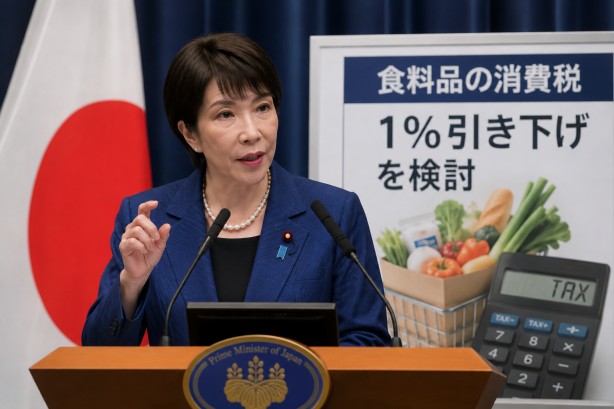
Japanese Prime Minister Sanae Takaichi is poised to direct the ruling Liberal Democratic Party to advance a proposal aimed at significantly reducing the consumption tax on food items. Under this plan, the tax rate would drop from the current 8% to just 1% for a two-year period beginning in April 2027. This initiative comes in response to a stalemate in cross-party discussions concerning tax reform, highlighting the government’s commitment to easing financial pressures on citizens.
The proposed tax cut has garnered support from both the government and the ruling coalition, who are also advocating for additional financial assistance to support low- and middle-income families. This includes a substantial package of approximately ¥600 billion in fiscal aid, designed to further alleviate the growing cost-of-living challenges faced by many households.
As part of their strategy, the government is working towards finalizing the details of this policy by early August. The aim is to ensure a smooth legislative process, with plans to introduce the necessary legal measures during an extraordinary parliamentary session later in the year. This timeline is intended to facilitate the implementation of the tax reduction by the following April.
By reducing the consumption tax on essential food items, the government hopes to provide immediate and tangible relief to consumers, particularly those in economically vulnerable positions. The measure is seen as a crucial step in addressing the financial burdens exacerbated by recent economic conditions, while also fostering broader support for the ruling party’s overall fiscal policy agenda.