
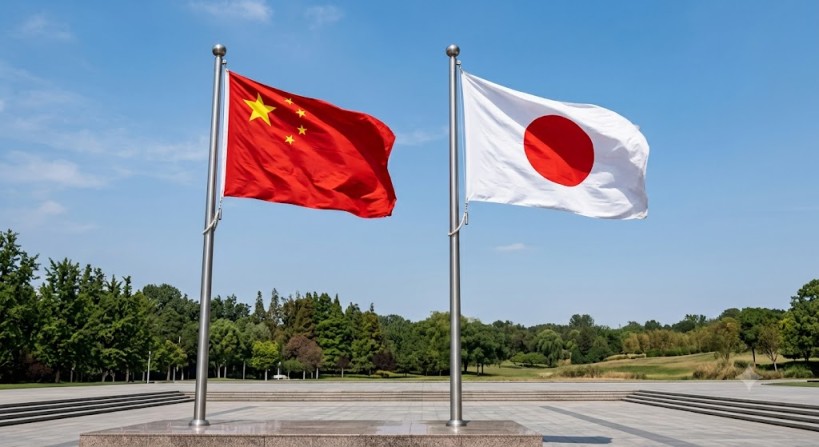
China has implemented new export controls affecting 40 Japanese entities, alleging they are aiding Japan’s expanding military capabilities and efforts towards “remilitarization.” These controls include restrictions on 20 Japanese firms and their divisions, including those associated with major corporations, to prevent both Chinese and foreign exporters from supplying them with certain dual-use items that can be utilized for both civilian and military purposes.
An additional set of 20 Japanese entities have been placed on a watch list, necessitating exporters to obtain special permissions, conduct risk assessments, and ensure products are not intended for military applications. China justified these measures, claiming they are essential to counter what it describes as Japan’s growing military expansion. Beijing has voiced its apprehensions about Japan enhancing its defense capabilities, particularly in terms of long-range weaponry and forming closer security alliances with other nations.
Japan has strongly criticized this move, deeming the export controls unacceptable and urging China to retract them. Japanese officials have stated their intention to evaluate the impact of these measures and consider suitable responses. Tensions between the nations have been escalating, especially following Japan’s recent expansion of its defense strategy and military capabilities. Beijing has consistently opposed Japan’s security policies, particularly those related to Taiwan.
Experts suggest that these restrictions might primarily serve as a diplomatic warning rather than a comprehensive economic strategy. Despite this, the relationship between China and Japan remains delicate amidst broader regional security issues. Both countries are navigating a complex geopolitical landscape, and these export controls add another dimension to their already strained interactions.