
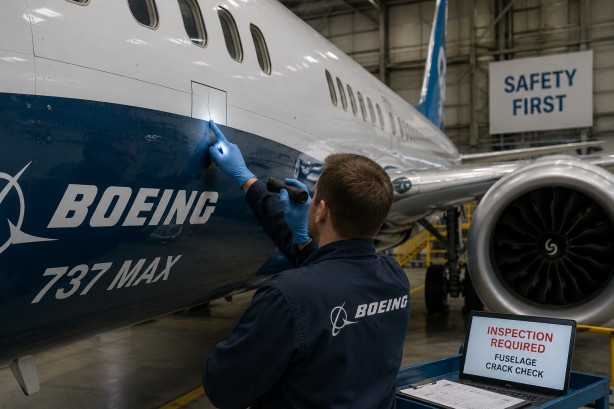
The Federal Aviation Administration (FAA) has instructed airlines operating Boeing 737 Max jets to conduct inspections for potential cracks in a critical fuselage component. This directive impacts approximately 471 aircraft, with inspections set to commence this September. The focus of these inspections is the bear strap, a structural element that reinforces the fuselage around the exit doors. This precautionary measure follows the discovery of similar cracks in the older Boeing 737 Next Generation models, which led to inspections of those aircraft as well.
So far, no cracks have been detected in the 737 Max fleet. However, given that the aircraft shares a comparable design and manufacturing process with its predecessors, FAA officials acknowledge the possibility of the same issue arising in these newer models. The agency cautioned that any undetected cracks could compromise a principal structural component, thereby affecting the aircraft’s overall structural integrity.
Boeing has been actively collaborating with airlines to address the issue since it was first identified in 2019. The company is in favor of the mandatory inspections, which are intended to detect and rectify any potential problems before they escalate to hazardous levels. Boeing emphasizes that these checks are a proactive measure to ensure safety and reliability.
This latest development adds to the ongoing scrutiny surrounding the Boeing 737 Max, which has faced intense examination following past safety incidents. The aircraft was grounded worldwide after two tragic crashes in 2018 and 2019, which raised significant concerns over the manufacturing and engineering standards of the model. The mandatory inspections reflect continued vigilance in maintaining aviation safety standards.