
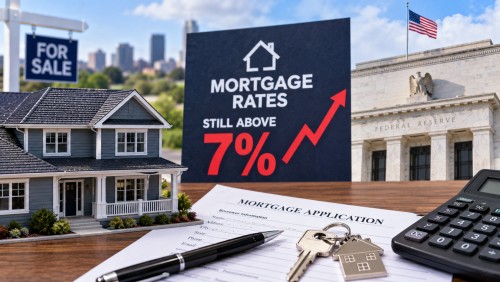
The U.S. housing market is facing intensified challenges as mortgage rates continue to hover above 7%, compounding the financial strain on prospective homebuyers. This situation arises amid the Federal Reserve’s decision to raise its target interest-rate range to 3.75%-4%, in an ongoing effort to manage inflation, which remains stubbornly above the central bank’s 2% target.
While the Fed’s rate hikes aim to curb inflation, they don’t directly cause an equivalent rise in mortgage rates. Instead, mortgage rates are influenced by a variety of factors, including financial markets, investor demand, and inflation expectations. Consequently, the recent adjustment in the Fed’s policy does not automatically translate into higher rates for home loans.
As of September 17, 2026, the average rate for a 30-year mortgage in the U.S. stood at 7.37%, while the average rate for a 15-year mortgage was 6.62%. This marks a significant increase from March, when the average 30-year mortgage rate was 5.75%, thereby elevating monthly payment obligations for many buyers. Homebuyers can still find rates below the national average, depending on factors such as credit score, down payment size, and the specific terms offered by lenders. Options such as paying mortgage points or choosing adjustable-rate mortgages can also impact the rates borrowers pay.
The rise in borrowing costs is not limited to new mortgages; refinancing has also become more expensive. The average refinance rate for a 30-year loan reached 7.41%, with the 15-year refinance rate at 6.75% as of mid-September. For homeowners with existing mortgages at lower rates, refinancing might not be appealing unless the potential savings justify the associated costs.
Looking ahead, mortgage rate trends will be shaped by broader economic conditions, including inflation dynamics, financial market fluctuations, and future policy decisions by the Federal Reserve. While some potential borrowers may hope for rates to decrease, economic uncertainty means there is no assurance that waiting will lead to more favorable borrowing conditions.