
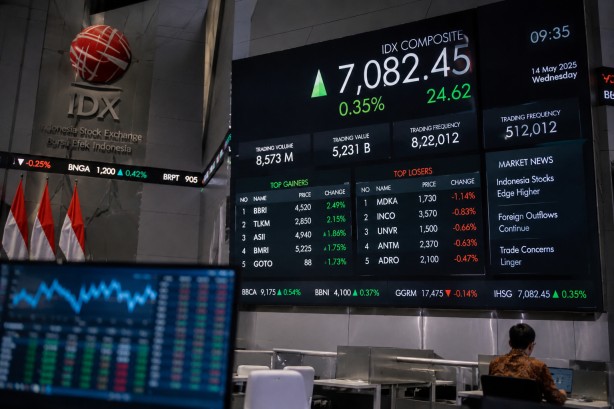
During the week ending July 24, Indonesia’s primary stock market indicator, the Jakarta Composite Index (JCI), experienced a 0.34% increase. This upswing was attributed to heightened trading activity, despite a backdrop of persistent foreign investor withdrawals and mounting global economic uncertainties. The market capitalization of the Indonesia Stock Exchange climbed to Rp 10,870 trillion, while the average daily trading turnover saw a significant 41% boost, reaching Rp 19.76 trillion. Nonetheless, foreign investors persisted as net sellers, with total outflows accruing to Rp 79.09 trillion for the year, demonstrating a cautious approach towards Indonesian assets.
Global factors have been influencing market sentiment, particularly the escalating oil prices driven by intensified tensions in the Middle East. Additionally, new tariffs imposed by the United States on imports from various trading partners, including a 10% tariff on selected Indonesian goods, have also contributed to the cautious market environment. These international developments have been critical in shaping the economic outlook and investor behavior in the region.
The Finance Ministry of Indonesia has acknowledged the potential impact of rising oil prices on the country’s fiscal plans, especially concerning the 2026 state budget. Despite these challenges, officials maintain that Indonesia’s overall fiscal position remains robust. The ministry’s stance reflects confidence in the country’s ability to navigate these external pressures without derailing its financial stability.
While the local stock market has shown resilience through increased trading activity, the ongoing foreign capital outflows highlight the uncertainties faced by investors. This underscores the complex interplay between domestic market dynamics and global economic conditions that continue to influence investor sentiment. The ability of Indonesian markets to attract and retain foreign investment will likely depend on the resolution of these broader economic issues.